That Trademark Renewal Letter May Not Be From the USPTO. 4 Checks Before You Pay
This month the USPTO moved against private companies that sent official-looking trademark renewal notices, and some owners who paid could lose their registration. Four checks to make before you pay any trademark notice.
A letter or email says your US trademark is about to expire and asks you to pay now. It looks official. It may not come from the US trademark office (the USPTO) at all.
This month the USPTO acted against this kind of notice, and some business owners who paid could lose their registration. Here is what happened and four checks to make before you pay any trademark notice.
What happened
On November 18, 2026, the USPTO issued an order against two private companies that sold trademark "renewal" services, according to summaries by the law firms Miller Nash and Lowndes (JD Supra).
- Owners received invoices from a company with an official-sounding name, saying their registration was about to expire, often long before anything was due.
- Owners who paid had filings made in their names by people who were not US-licensed attorneys.
- The USPTO says it may now cancel some of those registrations. Affected owners were notified at the email address on their trademark record and have until December 18, 2026 to respond.
The lesson for every business: an official-looking letter is not proof that a deadline is real.
Why it matters for your business
A registered trademark protects your brand name, not just your website address. If a registration is cancelled, you may have to file again, wait again and pay again, while someone else could start using a similar name.
4 checks before you pay any trademark notice
- Check who sent it. The USPTO says its official email comes only from addresses ending in @uspto.gov (USPTO). A company name that sounds like a government office proves nothing.
- Check the real deadline. A US registration needs a maintenance filing between the fifth and sixth years after registration, another with the renewal between the ninth and tenth years, then every ten years (USPTO). If the date in the letter does not match your record, stop.
- Compare the price. Check any invoice against the fees the USPTO publishes. A bill far above the official fee is a warning sign.
- Do not sign over authority to a stranger. Only you or a US-licensed attorney can file for you. If a form asks you to authorize a company you have never worked with, ask your attorney first.
One more habit: keep the email address on your trademark record current, and make sure someone reads it who would recognise a real USPTO notice.
How CertPing helps you check the record
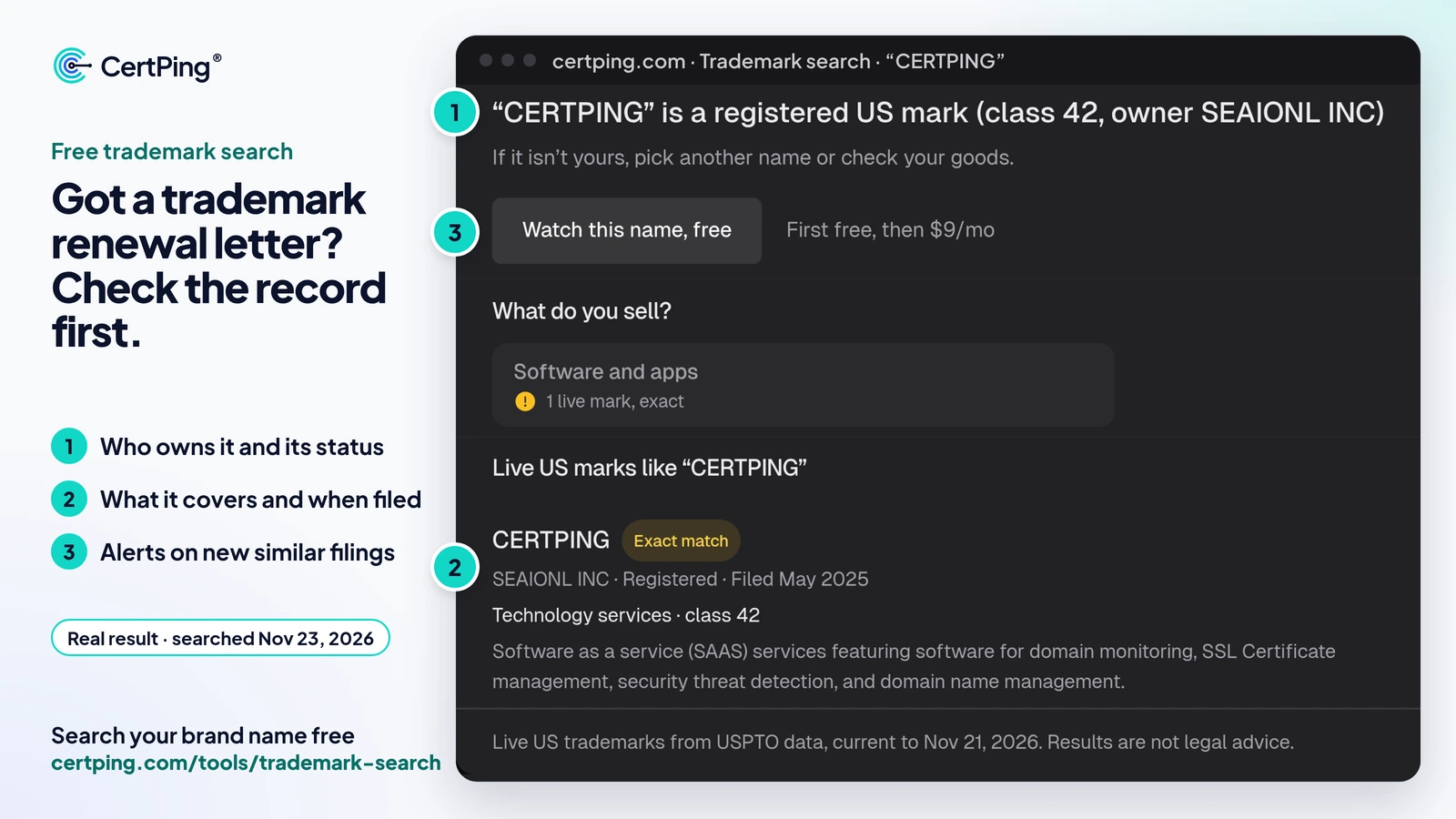
CertPing's free trademark search shows US marks that match or resemble your name, with the owner, the class (the type of goods or services it covers), whether it is registered or pending, and a link to the official USPTO record. It is free and needs no account.
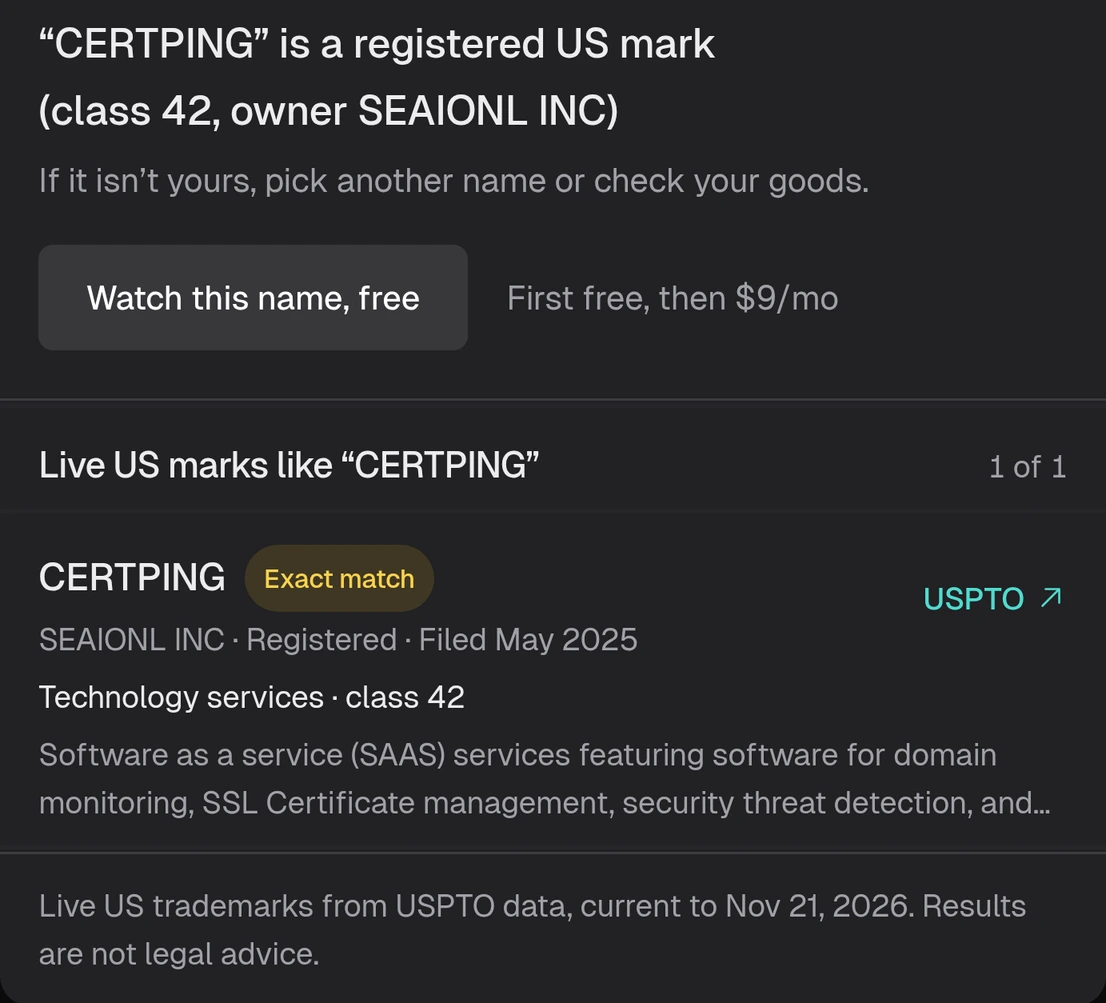
Real result: CertPing's free trademark search for "CERTPING", run on November 23, 2026.
- Owner and status: who holds the mark and whether it is registered.
- Class and filing date: what the mark covers and when it was filed.
- Watch: turn on alerts for new USPTO filings that look like your mark. Your first brand name is free in the Domain Security bundle.
What it does not do: the search covers US (USPTO) records only, results are information and not legal advice, and CertPing is not a law firm. For your exact maintenance deadlines, open the official USPTO record linked from the result.
If you think you received one of these notices
- Do not pay or sign anything yet.
- Look up your registration on the official USPTO record and compare the dates.
- If you are unsure an email is genuine, the USPTO suggests calling its Trademark Assistance Center at 1-800-786-9199 (USPTO).
- If the USPTO has told you your registration is affected, speak to a trademark attorney before the December 18, 2026 deadline.